



Digital twins for the AI era
Measure the gas. Model the mass. Act early.
AI is only as good as what it knows about your supply chain. IoT measures it. CFD fills in the rest. AI agents integrate with your flow.

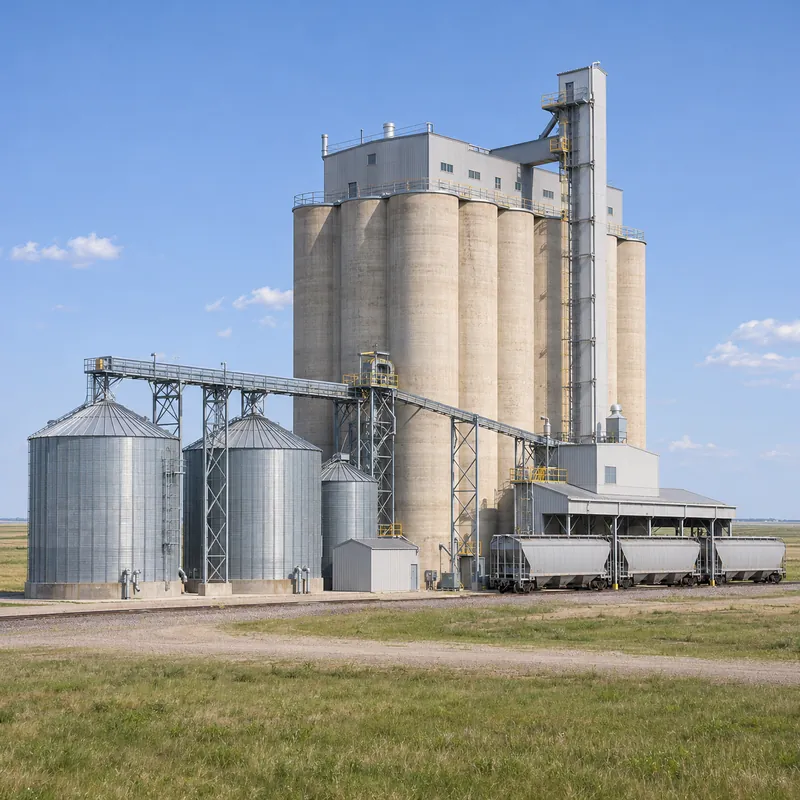 Silos
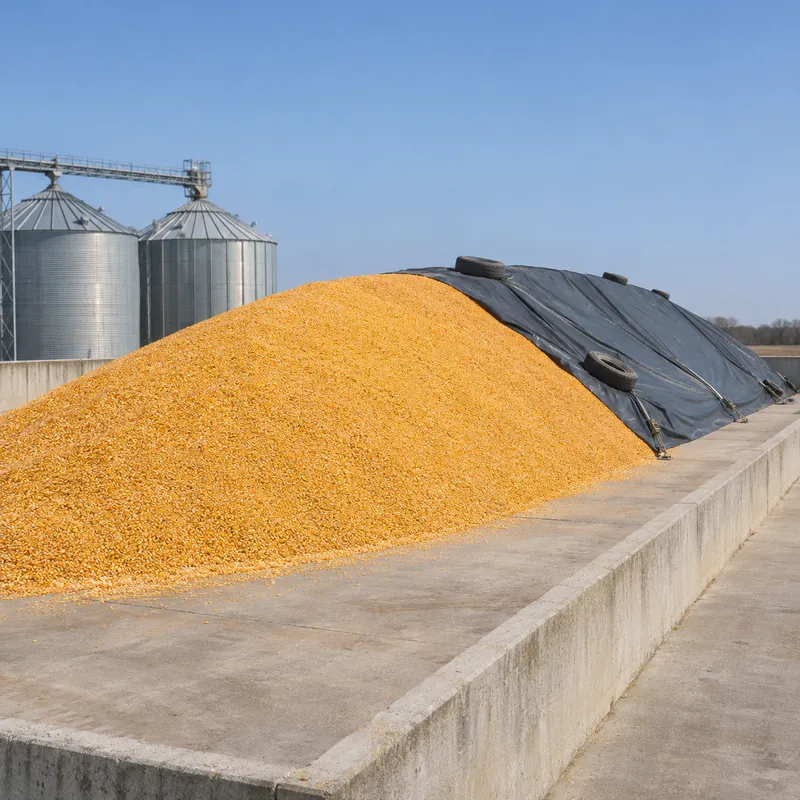 Piles
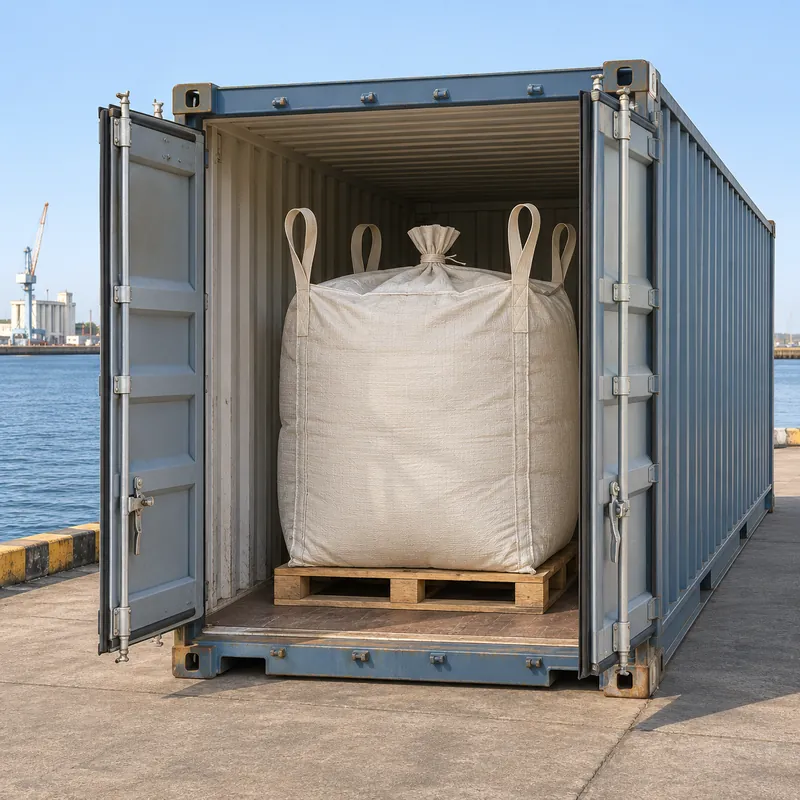 Containers
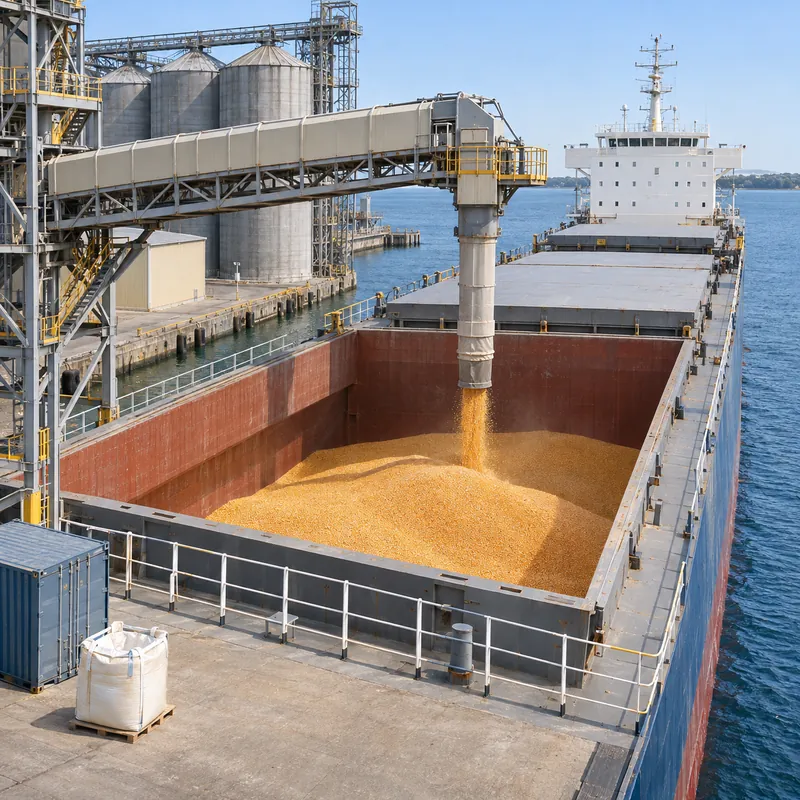 Vessels
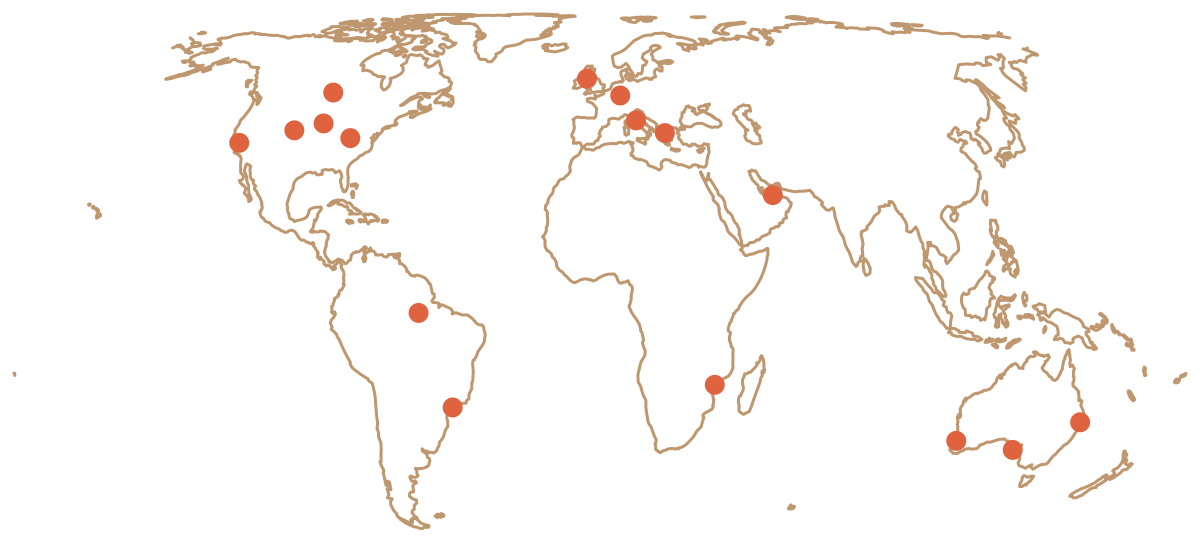
Powering agribusiness and food companies on 5 continents
Three innovations. One picture for your grain.

- 01 Measure IoT = measure the gas Internet of Things Wireless sensors in the grain read CO₂, temperature and moisture. CO₂ is the blood test for grain: it can rise before heat, smell or mould.
- 02 Model CFD = model the mass Computational fluid dynamics The physics that fills in the grain between your sensors: airflow, heat and moisture, everywhere in the bin.
- 03 Act AI = act early Artificial intelligence Predictions turn the picture into a next step: which bin needs attention, how many hours to run the fans, when to call the fumigator.



You shouldn't need a PhD to read your bin.
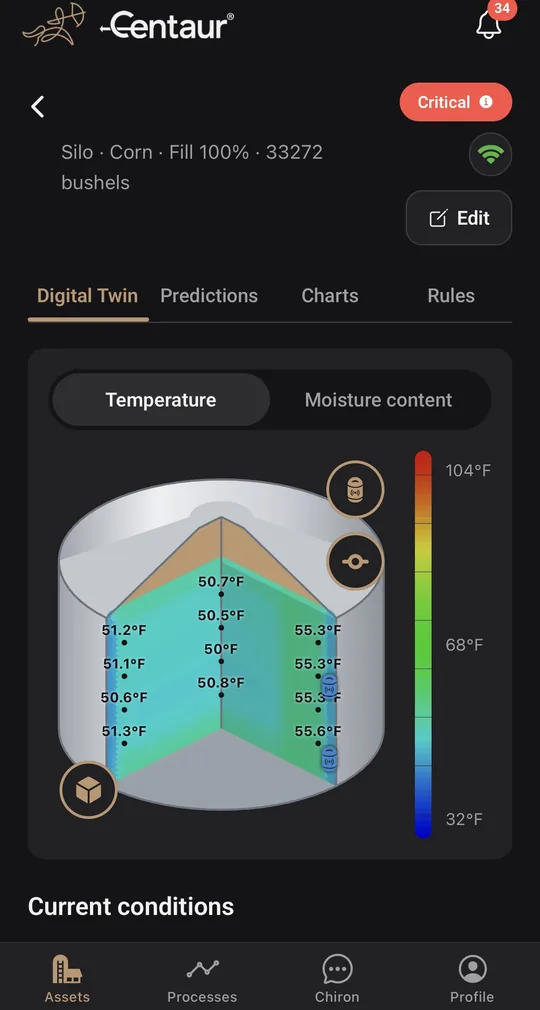
Sidewall sensors read grain from the edges. The twin fills in the middle, day by day. Hotspots are predicted before appearing, thanks to continuous CO₂ and moisture sensing, weather station data, and CFD simulation on the cloud.
See inside your grainStart with a virtual sample.
No sensors needed. Explore a sample bin or connect existing data through an API. Add devices for measurements from your own grain.
Coming in January.
Grounding agentic AI in the grain itself.
Chiron, Centaur's AI, connects your questions to sensor and digital-twin data. Bring existing systems into the conversation through Centaur's API and Chiron's MCP server.
Explore Centaur for enterprise →How is my grain doing?
Warning
The model flags under two weeks of safe storage time, while the sensors look stable. The warning may come from model assumptions, missing humidity readings or conservative settings.
This week
Confirm grain type and target moisture. Plan drying or winter aeration if it's corn going into warm months.
- Moisture
- ~15.8%
- Borderline for long storage
- CO₂
- ~400 ppm
- Normal, no respiration spike
- Grain
- 46.6–48.9 °F
- Cool and stable
- Stock
- 658 t
- In 1 bin · ≈ 25,900 bu if corn
Thinking beyond the next harvest.
Practical ideas on grain, pest control, sustainable production, and AI.